Zminy obrazu suchasnoho zhyttia pid chas viiny (Зміни образу сучасного життя під час війни, “Changes in the image of contemporary life during the war”)

Sociological research shows that during the war the level of life satisfaction among Ukrainians has been steadily falling. While in 2021 a relative majority of those surveyed (57%) said that they were generally satisfied with their life, in 2024 only 25% of respondents felt a high or very high level of life satisfaction, and in 2025 only 17% of citizens said that they were generally satisfied with their life. Usually respondents are asked to rate their satisfaction with various aspects of life — the level of safety, material welfare, the quality of medical care and so on. In our study we look at how the image of contemporary life formed in mass consciousness changes over the course of the war. The empirical basis is data from six waves of a study (on its design see the note) in which respondents were asked to assess their life using a set of 21 pairs of polar ratings that described life along the dimensions of safety (stability, steadiness, calm, simplicity, safeness), agency and rationality (activity, progressiveness, constructiveness, reasonableness, rightness), morality (dignity, humaneness, truthfulness, openness, freedom) and emotional perception (optimism, joy, cheerfulness, happiness, variety, interest).
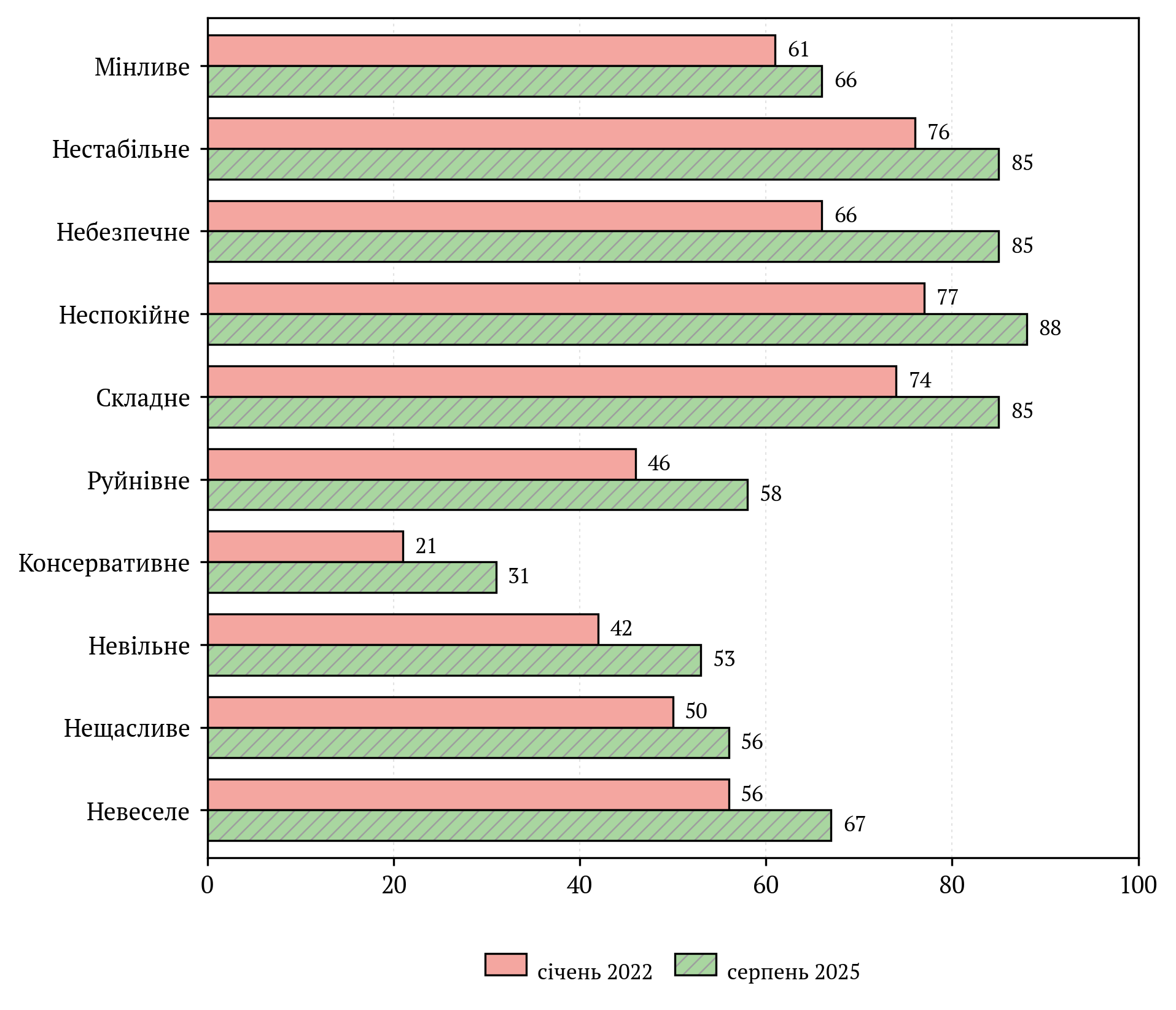
On the eve of the war, in January 2022, most respondents perceived life as restless (77%), unstable (76%) and difficult (74%). Moreover, 66% considered it dangerous. Paradoxically, the assessment of danger improved between January 2021 and May 2022: the share of those who considered life dangerous, despite the reality of possible threats, fell by 10% (from 66% to 56%). This happened when the imagined danger that had frightened people against the background of expectations of a possible war was replaced by a real one. Life did not become safer, but the assessment of real threats turned out to be more restrained, especially considering that these measurements were taken in May, when the first shock of the war had to some extent been overcome, it had become clear that the blitzkrieg had not happened and the situation had stabilised to a degree. A year later, in April 2023, there was a return to pre-war assessments, and in 2024 and 2025 negative assessments across all indicators of the block rose sharply, while the number of those who hesitated to answer fell steeply. How this happened can be seen in the example of assessments of life as dangerous.
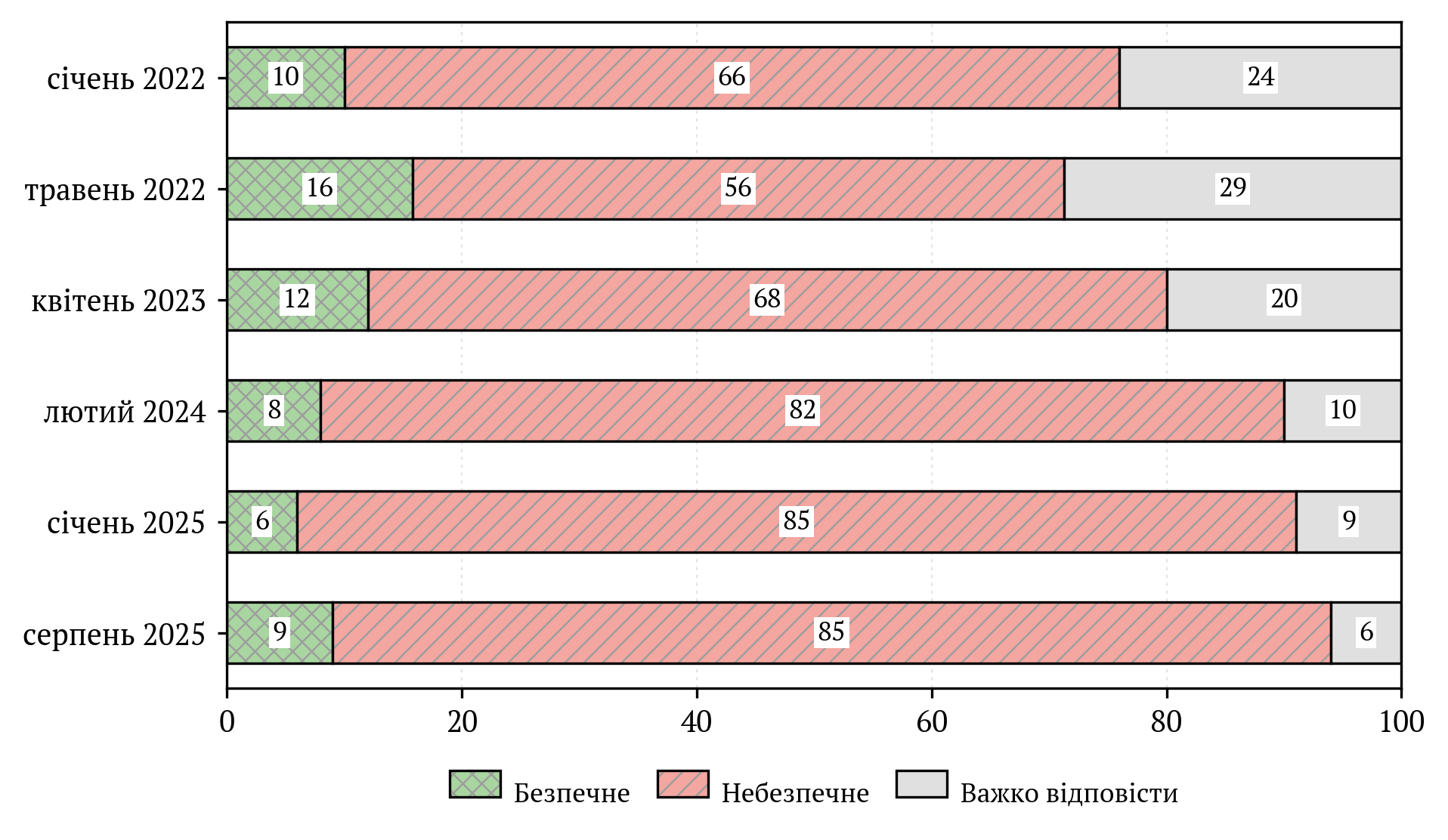
The dynamics of the assessment of steadiness and changeability of life differed somewhat. Here a large share of those who had not made up their mind persisted for a long time. Gradually, however, as the war became routinised, the uncertainty of the situation became an attributive characteristic of life during the war for most of the population.
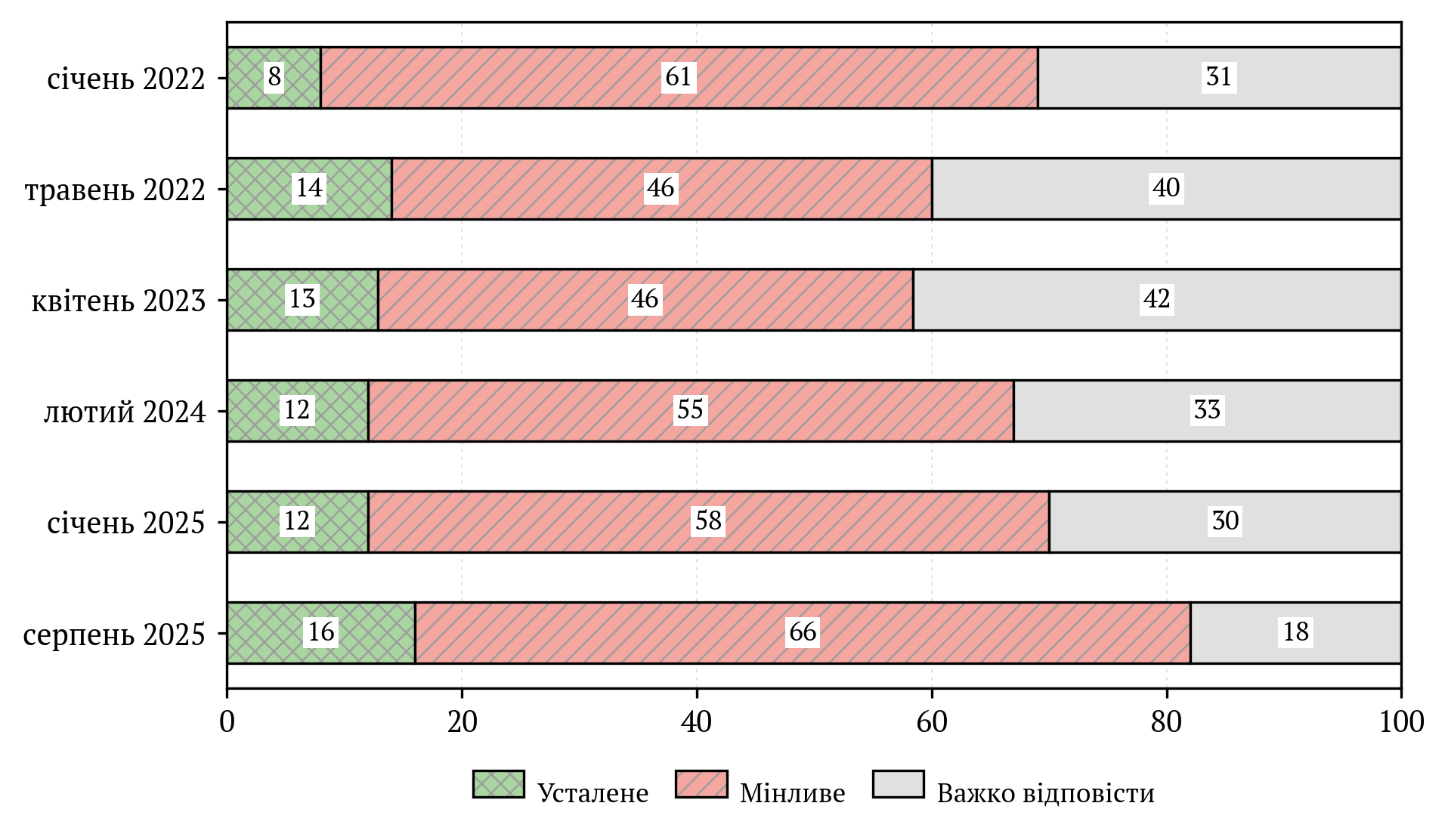
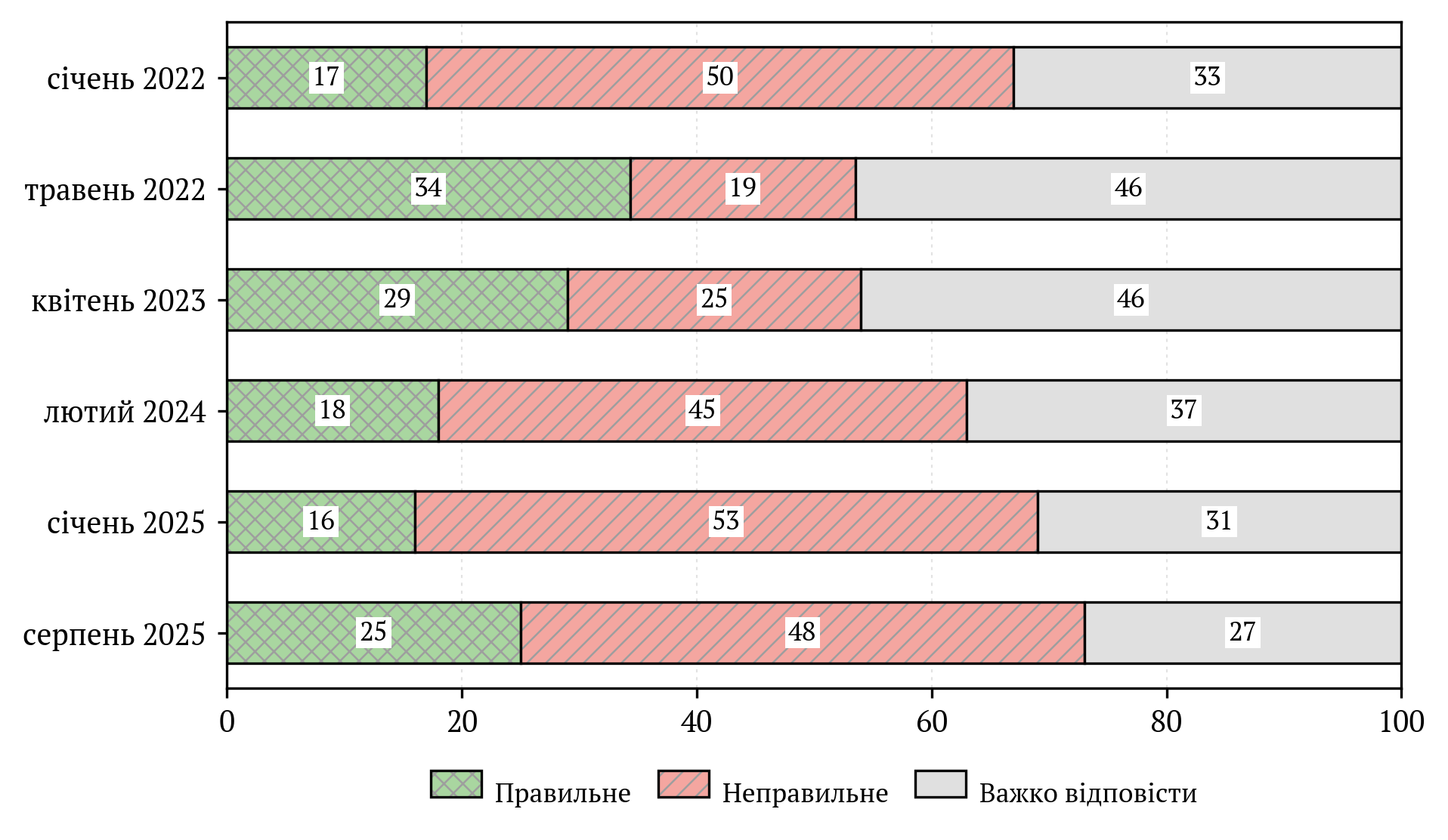
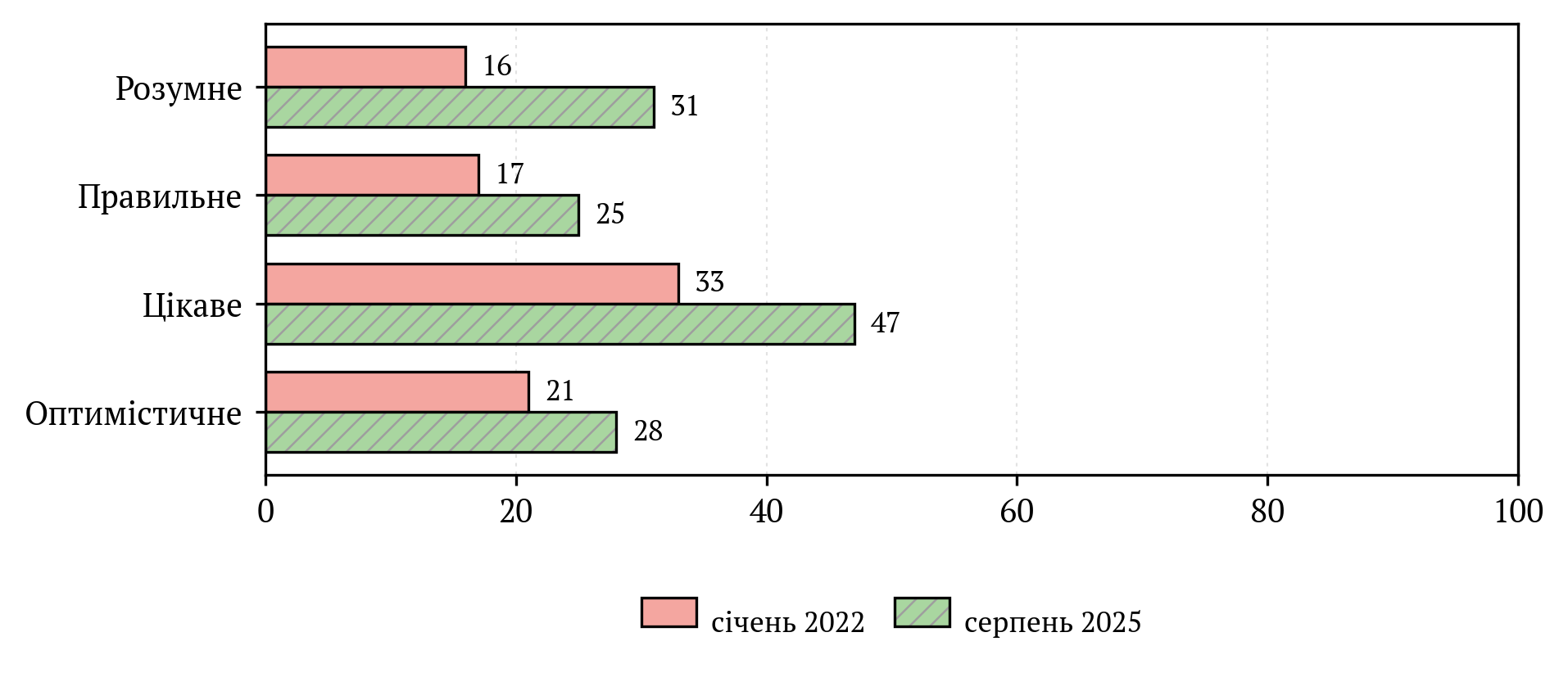
We observe a similar picture in the block of rational and agency-related assessments. Here too the dynamics of the indicators was positive at first. In particular, respondents’ perception of life as reasonable and right changed. On the eve of the war almost half of the assessments were concentrated around the negative pole — 48% considered life unreasonable, 50% considered it wrong. Against the background of the war, however, it was not especially logical to consider life in a country trying to resist an aggressor unreasonable and wrong. It was therefore to be expected that in 2022 there was a radical fall in negativity: only 17% called life unreasonable and 19% called it wrong. Yet already in 2023 negative assessments began to grow and subsequently, as can be seen in the example of the assessment of the rightness of life, returned almost to the pre-war level.
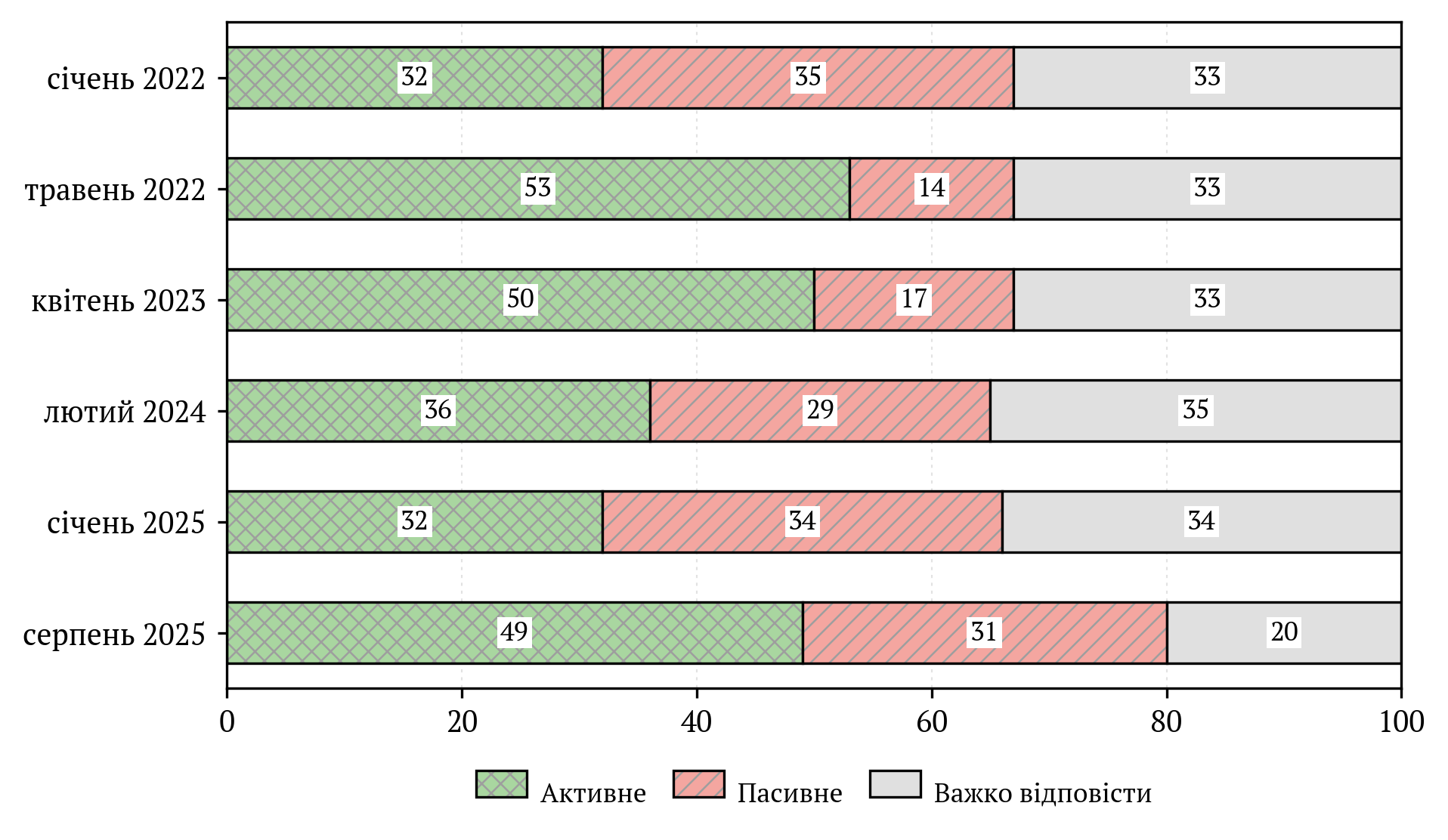
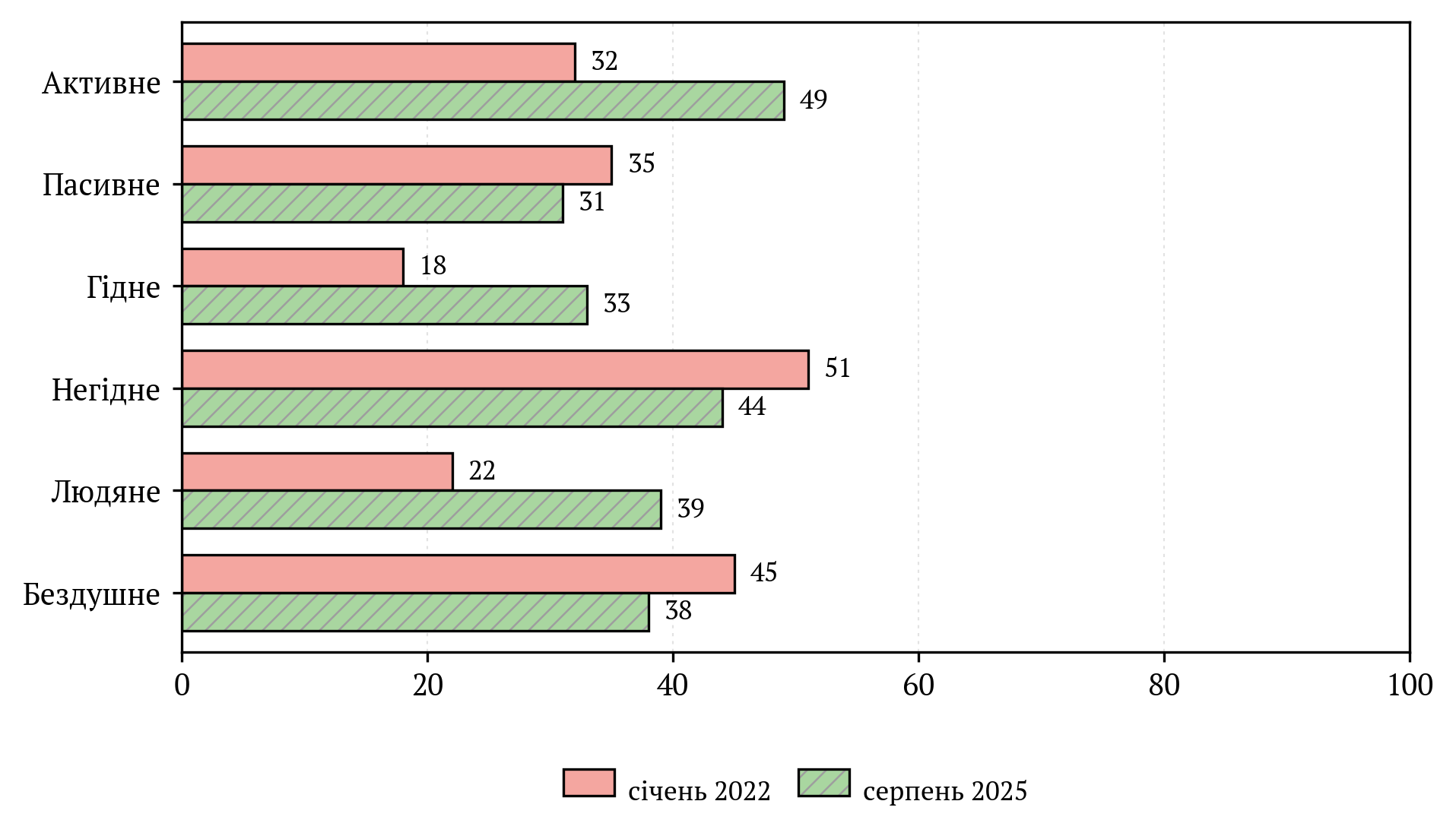
Changes in life under the influence of the war directly affected the demand for personal activity. Whereas before the war a third of the population assessed life as active, a third as passive, and the rest wavered between these assessments, after the war began the number of those who considered life active grew from 32% to 53%, and the number of those who perceived it as passive fell by approximately the same amount — from 35% to 14%. We can therefore state that the war mobilised the activity of the population, which of course took various forms but required behavioural change. At the same time, the dynamics of change here too was non-linear. The surge of activity was followed by a decline, which, however, again turned into a rise, since survival during the war requires a constant concentration of personal resources.
The morality block covered two types of indicators that conventionally represented the assessment of life along the dimensions of truth and justice. In general, after the war began all the indicators of this block, on the ground of a sense of the justice of the struggle against the aggressor, lost substantially at the negative pole and strengthened at the positive one. The assessment of life as dignified rose from 18% to 44%; 57% came to consider life humane, against 22%. The struggle to defend life and freedom was reflected in the perception of life as free. In May 2022 that assessment was supported by 58% of respondents, compared with 30% in January 2021. Changes in the assessments of the truthfulness and openness of life were more moderate at the positive pole, but here too an almost twofold growth was observed. 33% came to consider life truthful, against 16% in the first wave of the survey, and 35% considered it open, against 19%. This surge, however, gradually began to subside, and the dynamics of the indicators of this group turned out to differ. The indicators of humaneness and dignity, although they declined compared with 2022, nevertheless remained considerably higher than before the war. In particular, in the last wave the assessment of life as humane or callous was expressed by groups of respondents almost equal in size (about 40% of those surveyed in each group), whereas before the war began those who considered life humane were half as many as those who considered it callous (22% against 45%). This shows that solidarity in Ukrainian society continues to be an important characteristic of social interactions.
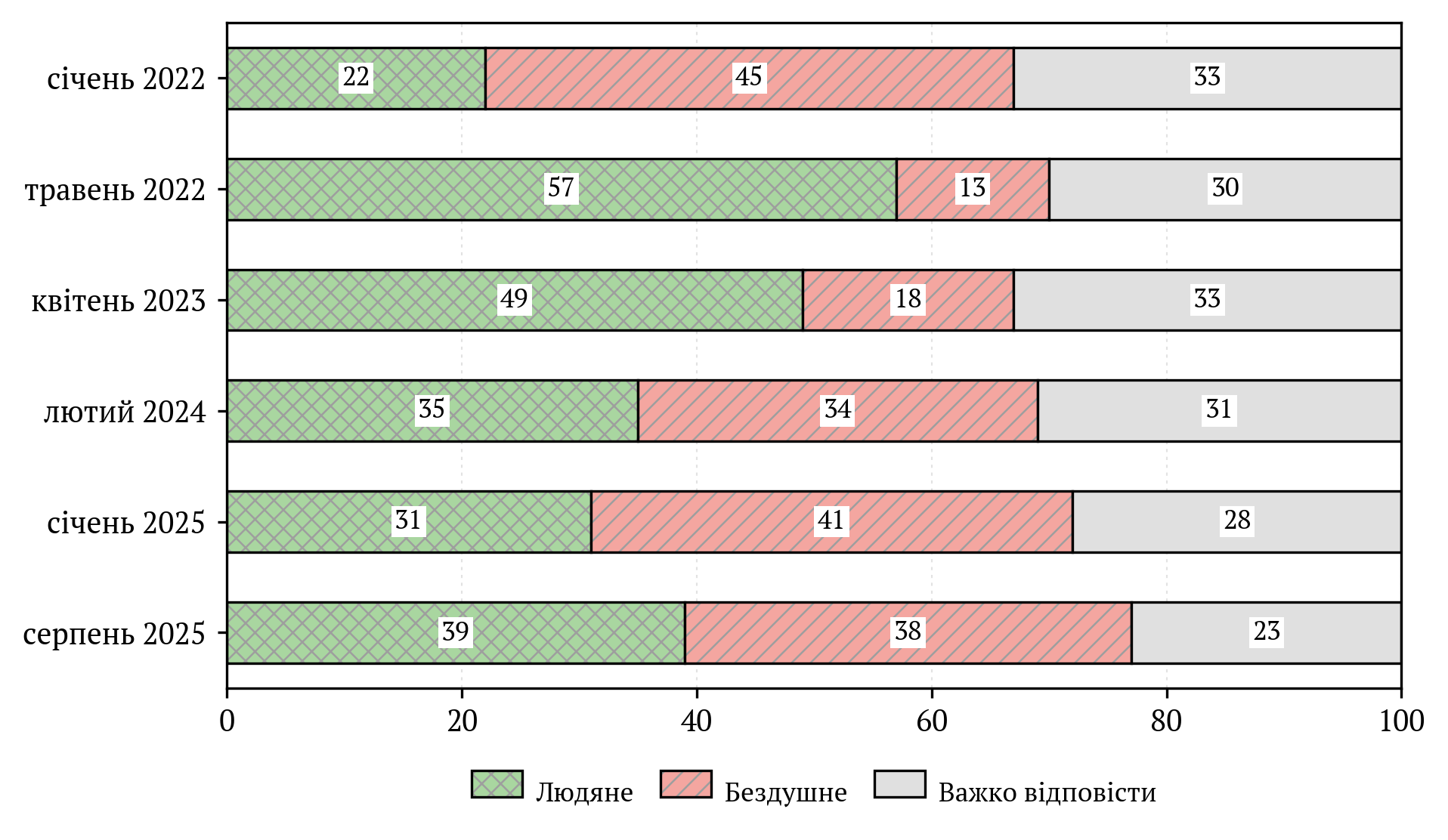
At the same time, another part of the indicators of the block, connected with the assessment of life as free, truthful and open, not only returned in 2025 to pre-war values but even showed a growth of negativity. In particular, on the eve of the war 42% of those surveyed considered life unfree, whereas in August 2025 more than half (53%) of respondents gave life such an assessment. The assessment of life as concealed grew in a similar way. In January 2022, 48% of those surveyed assessed it that way, and in the last wave this group already included 55% of respondents
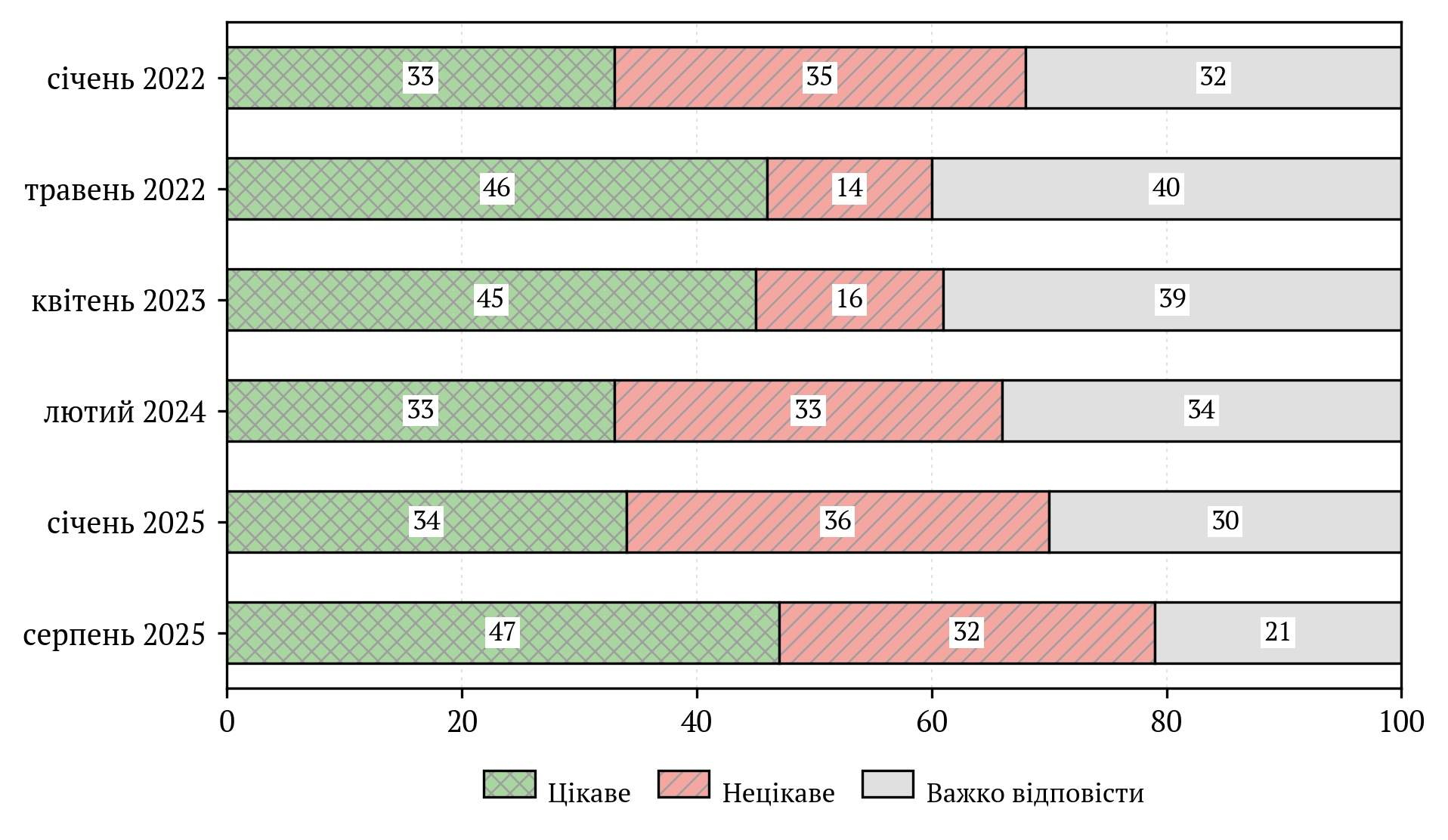
The assessments of the emotional block likewise show different trends. Substantial changes occurred in the assessment of life as interesting and varied. Whereas before the war the number of those who chose indicators at the positive and at the negative pole was fairly close and amounted to about a third of those surveyed, after the war began almost half of the respondents considered life varied (49.3%) and interesting (46.5%). Although the war does not add optimism, events are watched closely, and the unpredictability of life demands constant concentration on what is happening.
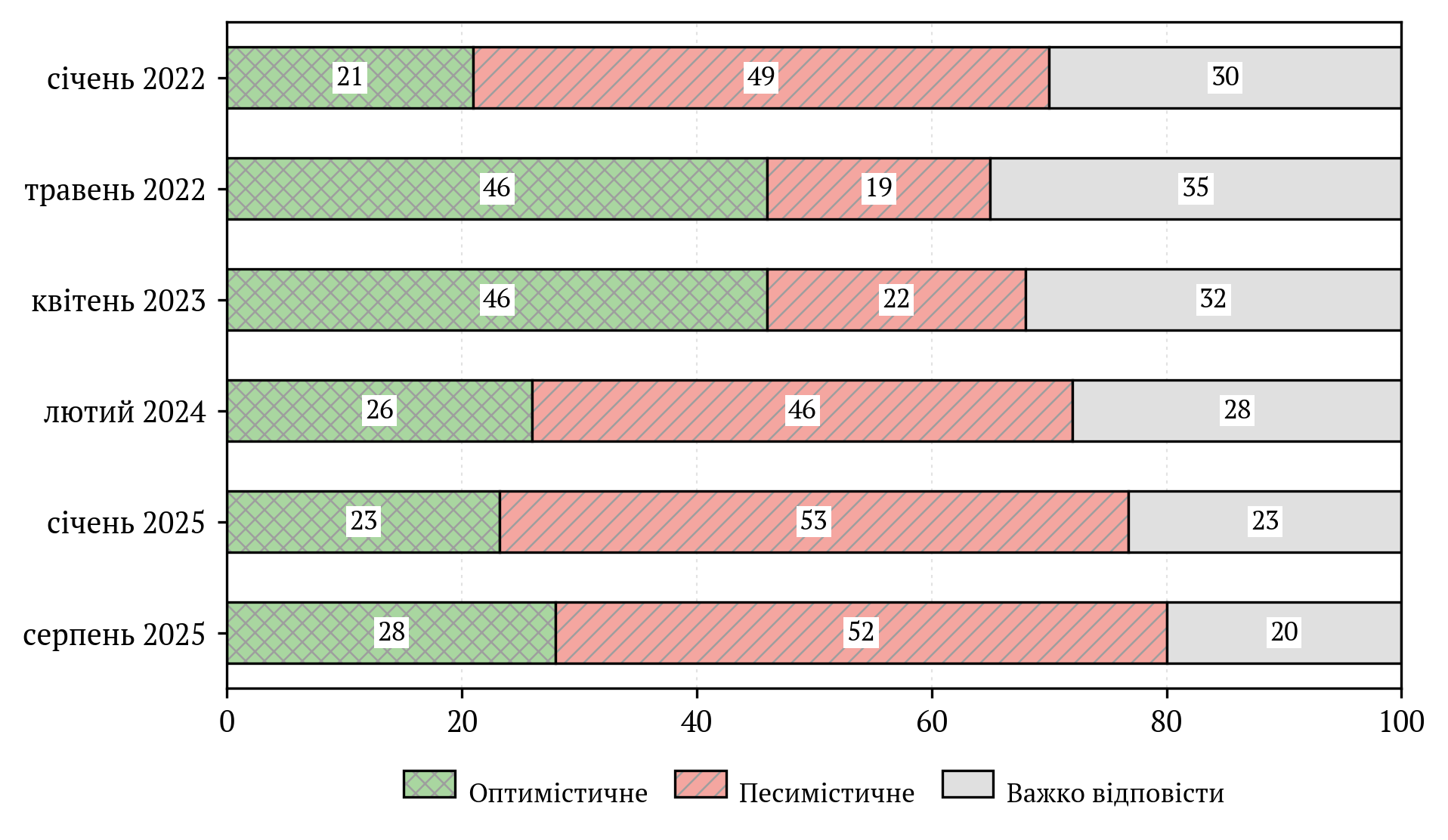
Positive shifts in the emotional state of the population were characteristic of 2022 and 2023. And the growth of optimistic moods at that moment was quite understandable. If in May 2022 it was grounded in the conviction that the country would not be seized by the enemy outright, then in April 2023 great hopes were placed on the summer offensive. As the war continued, however, optimism decreased and pessimism grew. At the same time the share of those who hesitated over an assessment also fell. In the end, according to the data of the last wave, more than half of the respondents see no reason for an optimistic assessment of life. The overall palette of emotional states looks rather gloomy. According to the data of August 2025, 69% considered contemporary life sad and 56% considered it unhappy.
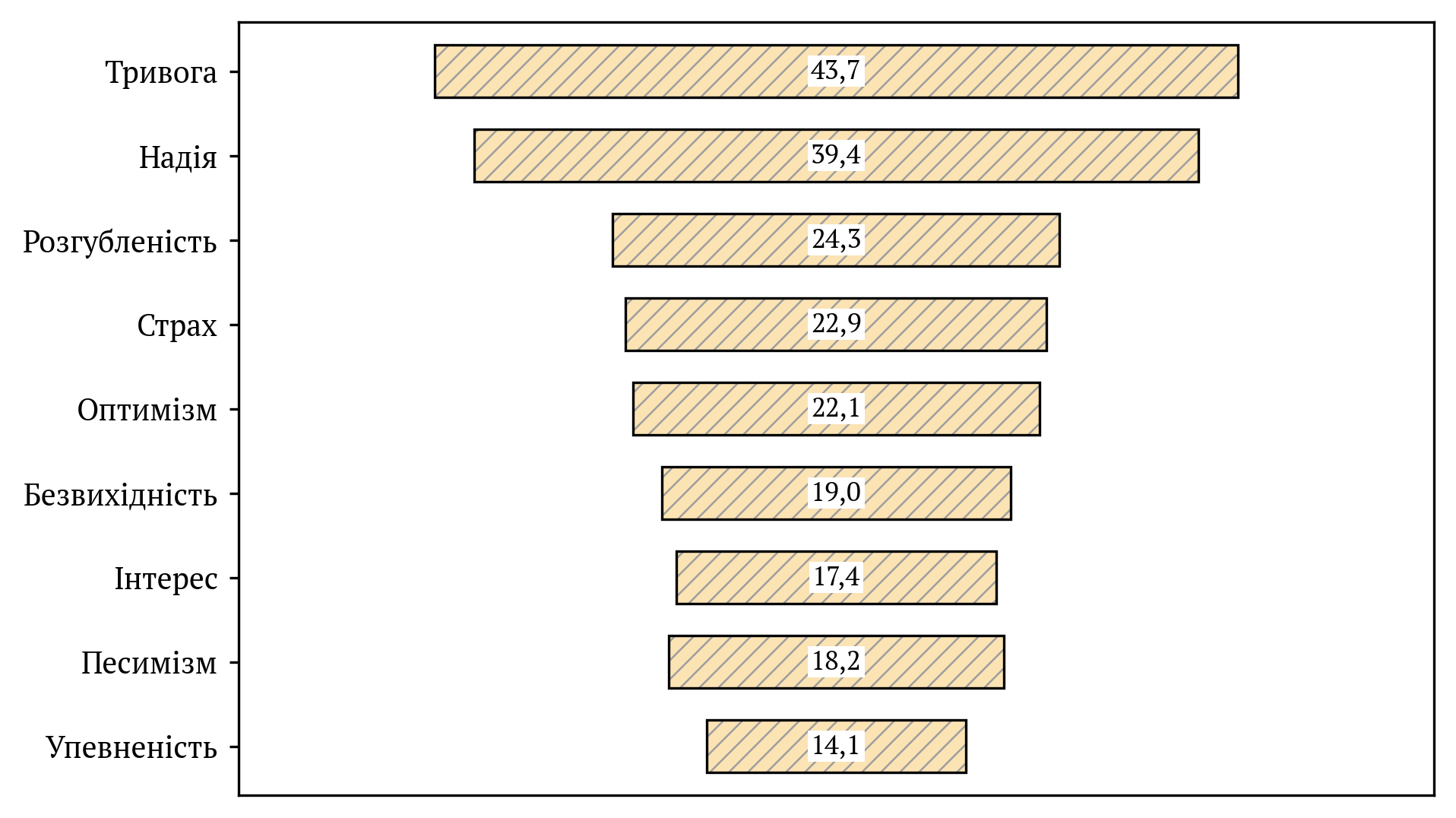
At the same time, the overall picture of emotional states is fairly mobile and filled with different experiences. If we compare the answers of respondents to the question “What feelings arise in you when you think about the future of Ukraine?”, obtained in April 2023 against the background of optimistic assessments of life, we can see that what prevailed among emotional states was not optimism but anxiety.
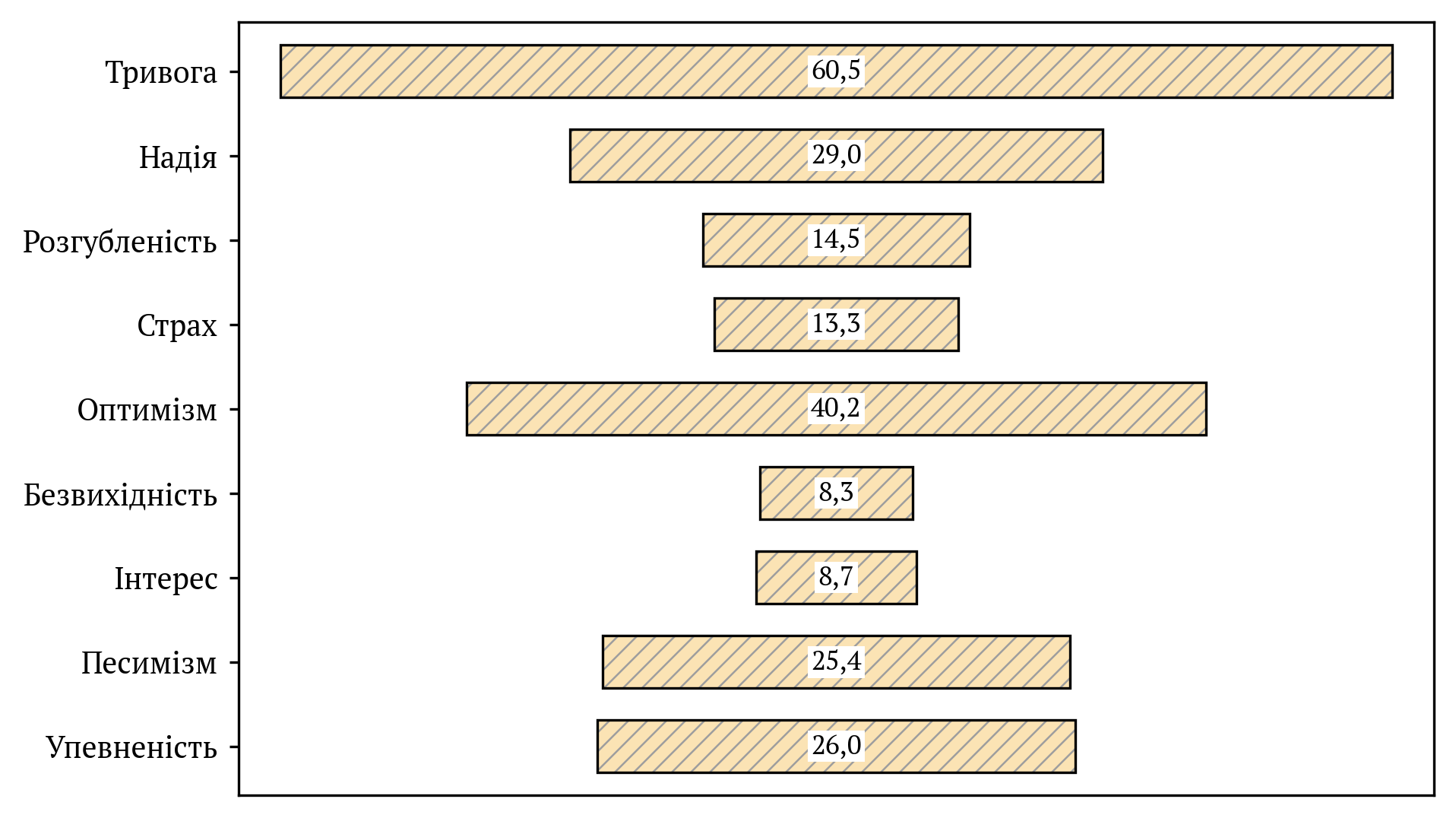
According to the data of the last wave, however, the picture of emotional experiences regarding the future of Ukraine looks somewhat different. On the one hand, one can see a substantial decrease of anxiety; on the other, the feeling of fear has grown. The population has to a considerable extent lost optimism, but at the same time there are fewer pessimists, while hope has grown noticeably.
Summing up the transition from the pre-war state to the state of war, we can state that the picture of the world has become more distinct thanks to the concentration of assessments at the poles. A comparison of the first and the sixth waves shows that assessments of life underwent processes running in different directions. On a number of indicators there was a substantial shift towards the negative pole. This concerns above all the safety block, where an almost complete agreement has formed regarding the assessment of contemporary life as restless, unstable, dangerous and difficult. The majority of those surveyed lean towards negative emotional assessments of life, characterising it as unhappy, cheerless and unfree.
A part of the indicators, on the contrary, is characterised by a strengthening of assessments of the positive spectrum. None of these indicators is currently shared by a majority of those surveyed, however. In general the tendency towards growth is fairly noticeable in most of them.
The positive dynamics is most noticeable in those cases where polarisation decreases through the simultaneous growth of the number of assessments at the positive pole and the decrease of assessments at the negative one. This is clearly visible in the assessments of activity and of the moral components of life. Although the main changes take place at the positive pole, the decrease of those who supported the opposite assessment improves the overall balance. For example, the noticeable growth in the number of those who consider life dignified has not yet led to such an opinion prevailing among the majority of the population. Yet those who consider life undignified are now also not an absolute majority. The gap between the groups that support the polar assessments is gradually narrowing.
The negative aspects of life, then, not only reflect the crises and trials our society has gone through and is going through, but also act as catalysts of resistance to adversity. The complexity and instability of life at the same time mobilise activity, humaneness and dignity, which sustains the national resilience of Ukrainians.
Note
The study was carried out with the instruments of the Institute of Sociology by the research company Gradus Research. The survey was conducted by the method of self-completion of a questionnaire in a mobile application. In the first wave the sample reflected the structure of the population of Ukrainian cities of more than 50 thousand inhabitants by sex, age [18–60 years], size of settlement and region. Fieldwork period: 5 January 2022. Sample size: 1000 respondents. In the subsequent waves the sample reflected the structure of the population that before the war lived in Ukrainian cities of more than 50 thousand inhabitants, by sex, age [18–60 years], size of settlement and region. Fieldwork period of the second wave: 23 May 2022. Sample size: 1133 respondents. Fieldwork period of the third wave: 13–14 May 2023. Sample size: 1333 respondents. Fieldwork period of the fourth wave: 1–2 February 2024. Sample size: 1518 respondents. Fieldwork period of the fifth wave: 20–21 January 2025. Sample size: 1000 respondents. Fieldwork period of the sixth wave: 8–11 August 2025. Sample size: 1000 respondents.
Institute of Sociology of the NAS of Ukraine
National Academy of Sciences of Ukraine. The country's leading sociology research institution, founded in 1990.