Author(s) / Editor(s):
Klymenko Оlena Yuriivna, Professor, Doctor of Science in Sociology, Professor, Senior Research Fellow, Department of Social Expertise, Institute of Sociology of the National Academy of Sciences of Ukraine
email: klimenkoelens@gmail.com
ORCID: https://orcid.org/0000-0002-8560-8642
Year: 2024
Pages: 366–387
Publication language: Ukrainian
Publisher: Institute of Sociology of the National Academy of Sciences of Ukraine
Type of Publication: chapter in edited volume
Publication Place: Kyiv
DOI: https://doi.org/10.15407/book3.978-617-14-0292-8.13
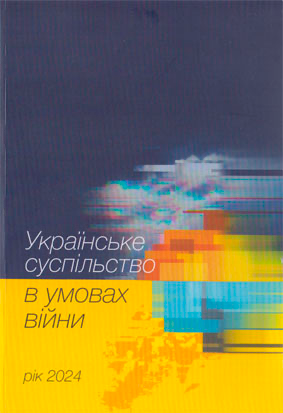
The aim of this chapter is to analyze the theoretical aspects of the institutionalization of veteranhood under the conditions of the Russian-Ukrainian war. The chapter explores the theoretical foundations of veteranhood institutionalization as an element of the transformation of social order during wartime. It examines the concepts of «veteran» and «veteranhood» through historical, sociological, legal, and political lenses, and outlines the main approaches to understanding veteranhood in the modern world. Particular attention is given to the global experience (United States, United Kingdom, Israel) of shaping the institution of veteranhood in relation to the Russian-Ukrainian war, with a focus on how the hybrid nature of the armed conflict affects the legal framework, societal perception, and practices of veteran identity. The chapter highlights the roles of state and non-state actors in the development of veteran institutions, and outlines the potential of veteran communities as agents of social integration. The theoretical understanding of the institutionalization of veteranhood is presented through the lens of institutional theory, as well as concepts of social solidarity, post-traumatic adaptation, and inclusion.
References:
Booth, W., & Lutz, C. (2011). Militarization and the Transformation of Society: Exploring the Links. American Ethnologist, 38(2), 147–164. https://doi.org/10.1111/j.1548-1425.2010.01299.x
Coleman, R. L. (2007). Veteran Reintegration Policies and Their Effectiveness. Military Medicine Journal, 6, 112–121.
Diaz, М. (2023). Veteran homelessness increased by 7,4% in 2023. https://news.va.gov/126913/veteran-homelessness-increased-by-7-4-in-2023/
Dron Media. (2024). Zelenskyi announced the size of the Ukrainian army. https://dron.media/zielienskii-ozvuchil-chisliennost-ukrainskoi-armii/
Gazit, N. (2015). From the Battlefield to the Psychologist’s Office: The Mental Health Care of Israeli Soldiers. Social Science & Medicine, 138, 46–52. https://doi.org/10.1016/j.socscimed.2015.06.016
Giddens, A. (1991). Modernity and Self-Identity: Self and Society in the Late Modern Age. Stanford University Press.
Habermas, J. (1984). The Theory of Communicative Action: Volume One: Reason and the Rationalization of Society. Beacon Press.
IDF operations. (2024). https://www.jewishvirtuallibrary.org/operation-gift
Kim, Y. S., & Ryu, J. H. (2017). The Effect of Social Exclusion on the Mental Health of Veterans: The Role of Social Support. Journal of Mental Health, 26(1), 67–74.
Lutz, C. (2009). The Bases of Empire: The Global Struggle against U.S. Military Posts. New York University Press.
Merton, R. K. (1957). Social Theory and Social Structure. Free Press.
National Center for Veterans Analysis and Statistics (2024). https://www.va.gov/vetdata/
Pomeroy, E. C. (2010). The Impact of Military Culture on the Reintegration of Veterans: Addressing the Needs of Veterans and Their Families. Journal of Family Social Work, 13(1), 37–56.
Issues of the activity of the Ministry for Veterans Affairs of Ukraine. Resolution of the Cabinet of Ministers of Ukraine No 986 of November 28, 2018. https://zakon.rada.gov.ua/laws/show/986-2018-%D0%BF#Text
On the status of war veterans, guarantees of their social protection. Law of Ukraine. Bulletin of the Verkhovna Rada of Ukraine (VRU), 1993, No 45, Art. 425. https://zakon.rada.gov.ua/laws/show/3551-12#Text
Saakov, V. (2023). Almost 5000 women serve on the front in the Armed Forces. Military Media Center. https://www.dw.com/uk/u-zsu-na-fronti-sluzat-majze-5000-zinok/a-67488927
Segal, D. R. (1986). Measuring the Impact of Military Service on Veterans: A Social Science Perspective. The American Journal of Sociology, 91(3), 511–531.
Segal, D. R., & Burk, J. (2012). Military Sociology. The Oxford Handbook of Military Sociology. https://doi.org/10.4135/9781446262559
Segal, D. R., & Segal, M. W. (2004). America’s Military Population. Population Bulletin, 59(4), 1–40.
Smith, Н. Л. Х. Х. (2020). Veterans’ Role Conflict: Navigating Military Identity and Civilian Life. Journal of Military Sociology, 15(3), 45–67.
Williams, S. M. (2015). Veterans and Social Exclusion: Understanding the Barriers to Community Reintegration. Social Policy and Society, 14(4), 641–652.